

25 June 2026. Police capture arrest 6 people outside Parliament in Nairobi. This happens in full view of cameras. The police later deny holding them. Two days after this thing that apparently didn’t happened happened, the six are released. Well, I say “released” - KNCHR says the six were dumped along Lang’ata and Ngong roads at about 4.00 a.m. on 27 June. The six say that they were tortured.
The Kenya National Commission on Human Rights recorded 7 enforced-disappearance incidents connected to that day’s protests. It counted 361 arrests across Nairobi, Kajiado, Kiambu, Murang’a, Bungoma, Laikipia, Machakos, Meru, Nyeri, Nakuru, and Nyamira. Among those arrested were human-rights defenders and 2 freelance journalists. That catch-whatever-you-can-grab, justification-be-damned approach to policing that we’ve witnessed many a time.
Now, just under seven weeks later, the government has launched a “national conversation”.
Allovasudden, we are talking.
And it’s a very flashy, very posh, very polished conversation. There are lights. There’s KICC. There are the “experts”, the faith “leaders”, the political “leaders”, the business “leaders”, the youth “leaders”, the young people… The optics certainly offer the impression of invites choreographed to tick very specific boxes. There’s also the President, who has come to “listen”, and TV stations, which have come to televise the President “listening”. After all, what’s the point of “listening” if you’re not broadcasted doing the “listening”? Especially in these near-election times? And after two proper years in which Kenyans have expressed themselves in memoranda, marches, placards, hashtags, occupations, songs, civic education threads, court petitions and the small, apparently radical act of standing outside Parliament, all in a bid to be heard? After all this, the state has finally discovered that it can build an elaborate stage, bring in a roving microphone, and “listen”.
We’re frequently accused of being resilient, us Kenyans. In fact, our resilience is often hailed as world-class, alongside our athletics. This acclaimed resilience extends to our public participation - you can teargas it, arrest it, abduct it, shoot at it, shoot it, call it treasonous, and accuse it of economic sabotage, and it will still receive an embossed invitation to KICC.
President William Ruto says this “conversation” must transcend elections.
“The next election will come and go,” he told the “launch” (yet one more thing that he has “launched”), before urging “Kenya” to “think” for the “next generation”.
This is technically - by the strictest definition of this word - “true”. It’s also the sentence a person may say when they want to distract you from the calendar.
This “national” “conversation” was “launched” on 12th August 2026. The Independent Electoral and Boundaries Commission has scheduled the next general election for 10th August 2027. Two days shy of a full year. This doesn’t, by itself, make the exercise a campaign. Presidents don’t stop presidenting (if they are indeed properly presidenting) because an election is approaching. Vision 2030 is ending - by mere fact of time being relentless on its march forward. Kenya needs a successor plan. Climate change, debt, demographic pressure, automation, regional trade, economic policy… All of it cannot be managed by pretending 2030 will politely wait for the campaigns to finish.
And yet, a successor plan already exists.
Let’s be honest - which is a sentiment that may be difficult for some people to understand, given their actions, but we’ll try it nonetheless: This is a campaign soft launch pretending to be a matter of national interest. I think even calling it a soft launch is very generous. This is one of the hardest soft launches I’ve ever seen.
Not because an election is near. Not because an election is near, and the incumbent has placed himself at the centre of a national future spacious enough to attempt to escape the dimensions and ramifications of his present record. Not because the process has arrived with polished presidential choreography before the public has seen the actual rules of said process. Not because the government will attempt to declare it citizen-led (lol) while the President launches it, his office frames it, state communications distribute it, and the public is “invited” into a proposition whose patronage is rather obvious.
No, not because of these things.
It’s precisely because every denial of the electoral is, in fact, reminding everyone of the election.
I’m not going to hold a banana in my hand in front of you, take a bite of said banana, and with my mouth full, tell you, “Oh no, this is not a banana,” and expect you to believe that it is indeed not a banana when you can very clearly see that it is, in fact, an actual real-life banana, as you sit there hungry, only sipping on a small Stoney.
Ruto spoke of unnamed people urging him to concentrate on the next election and leave long-term planning for another time. This is a remarkable critic he has suddenly started giving audience to, and perhaps a testament to his unending creativity: A citizen so completely and catatonically consumed by electoral tactics and theatrics, while the President is cast as the visionary, focused on the “next generation”. It’s a useful one, this unmentioned critic. Very useful. Incredibly useful because this critic, somehow, miraculously, allows the President to become the only adult in the room.
The rest of us, apparently, cannot distinguish long-term planning from the person convening it.
But there is a difference.
Kenya needs to plan beyond 2030, true. But William Ruto does not get to collapse “Kenya” and “the process convened by William Ruto” into the same “patriotic” position.
State House says the exercise will be inclusive, transparent and citizen-led. That’s great! That sounds wonderful! Wow! How very considerate, how very… constitutional!
But.
These are only promises. Distribution of power is what makes a process citizen-led - not the enthusiasm of its adjectives, nor the expensiveness of its presentation. There are things that must be properly considered AND answerd. Who set the questions? Who selected the “experts”? Under what terms? Who pays them? Who decides which submissions are admissible? Will every submission be published? Who synthesises disagreement? Must that body give reasons when it rejects a public proposal? Who owns the data? Can the public alter the foundational premise, or only decorate it? What institution receives the final text? What prevents the President’s campaign from using the forums, images, contact lists, language, and policy promises generated by a state-sponsored exercise?
But, over and above everything else, and perhaps the most prescient question to my mind: What is the point?
What, exactly, precisely, is the point?
Professor Hiroyuki Hino, one of the scholars behind the proposal received at State House in July (which by the way is another miraculous turnaround given that we are now in August) said Kenya possesses the personal attributes required for extraordinary growth.
Interesting phrasing.
He said more things.
He said the vision should be prepared by experts who are “independent of government” and “entrusted by the public”, with full stakeholder participation.
My man Hino was out to cook.
Not assembled by the President, launched by the President, narrated by the President, and subsequently certified as public because a curated cache of citizenry was placed within camera range. An invitation does not entrustment endorse. Attendance does not authority confer. A microphone does not constituent power make.
(Hino also said, by the way, in front of the bestest president to ever president, that reaching Singapore’s level of development in 30 to 40 years would be difficult. Many nodded passionately at their phone screens when they saw this; Conrad Kulo translated the mood in a manner so accurate and so succinct that I wished I thought of it myself: “A government that can’t collect garbage can not claim to dream.”)
We have done this dance before. Kenya’s political class manufactures a crisis, feigns surprise at the human cost the crisis they created extracts, names a unifying process, assembles respectable people, tours the language of inclusion around the country, and returns with a document. The document is declared historic. The political class congratulates itself. Us Kenyans are then thanked for participating in our own management with a “Here, have a Fanta.”
None of this is to brand the people who attend as foolish or captured. We will participate even if the participation is unwanted or made difficult. We enter compromised structures and still make honest demands. Experts can produce serious work inside political conditions. Citizens can seize a managed forum and say the thing it was not meant to hear. We will be there, no matter what. As a mhenga once famously said, “The people shall.”
The question is, what happens after the saying?
Because all of a sudden, this administration has become very interested in questions. On 21 July, when Ruto received Developing a New Vision for Kenya: Towards a First World Nation, he praised it for “asking important questions, challenging our assumptions, broadening our thinking”. A fine description of intellectual work. Not as fine as a substitute for executive answerability. The administration doesn’t need to spend millions in shillings and attention-grabbing efforts in the name of a new “national conversation”, when it has current, present, binding obligations it needs to discover. No future “plan” can reopen or postpone these very real obligations.
And yet, most, if not all, of the answers to the important questions, to the assumptions that are allegedly being challenged, to the thinking is allegedly being broadened… All this exists in a document called the Constitution of Kenya 2010.
And following said Constitution of Kenya 2010, Kenyans have also asked very important questions, now that we’re in the mood to hear questions all of a sudden.
Who authorised lethal force during protests? Where are the people still missing? What did police commanders know? Why do documented allegations of disappearance recur? What happens to an Auditor-General’s recommendation after it enters Parliament? Who owns the infrastructure through which public health claims are verified? When public participation rejects a proposal, can the proposal die? Should said proposal die in the first place? Why do such public participation proposals seem to so regularly end up assumed dead without even the performance of proper and respectful consideration? Which public officer loses a job when the Constitution is violated? Which one is promoted?
Are these not important enough questions? Do they not challenge assumptions enough? Do they not contribute towards broadening thinking?
The Office of the Auditor-General maintains public reports across ministries, departments and agencies. Its 2024-2025 corporate report says 79% of 580 recommendations tracked across 58 entities had not been fully implemented. Not ignored, necessarily. Some were partly acted upon; some require complex institutional response; some findings are disputed. Precision matters. It matters because even the careful formulation is damning. Four out of five recommendations in that tracked sample had not reached full implementation.
Where follow-up did occur, the office reports only KES 275 million in recoveries.
All this is part of my long-winded way to say: We do not have a national shortage of meeting minutes. We have a shortage of consequence.
The “genius” (if I could put quotation marks in bold, I would) of the “national conversation” is that it converts consequence into aspiration. Ask why current rights are not realised, and the government hands us a form on what rights should look like in 2060. Ask what happened to the last audit, and we’re invited to imagine better institutions. Ask why a young person was taken, and the “conversation” expands until the question becomes one of national unity, shared values, and this vague “future” we want “our children” to inherit. (Again, if I could put quotation marks in bold…)
This future tense is where present accountability is trying to run to to lose its pursuers.
Near the end of his speech, Ruto described the work beyond Vision 2030 as a collective responsibility. He said each Kenyan has a constitutional obligation to implement the Constitution and make its rights available to everybody.
There it is. The alibi. Deliberately put there so that when the court case inevitably comes up, they can point to it and say, “Oh, but everyone was invited.”
Constitutional life does require all of us. Citizens vote, organise, care, pay taxes, resist, create, litigate, teach, and build. Counties, Parliament, courts, commissions, business, and civil society each carry duties. But shared citizenship does not mean shared power. The unemployed graduate and the President are not colleagues assigned equal portions of a group project. Only one heads the national executive. Only one chairs Cabinet. Only one sits at the apex of the executive within which national security policy and resourcing are set. Only one arrives with a motorcade to tell the rest of the group that implementation belongs to everyone.
Only one puts their hand on a Bible and takes an oath of office to uphold the law and the constitution.
Article 73 says the authority of a State officer is a public trust. It is not a prize, a personal platform, nor a general national feeling. There is a specific constitutional burden - a moral burden - attached to power. Because power is supposed to be in service of the people, not lorded over the people.
The phrase “collective responsibility” therefore becomes suspect when power is particular but failure is communal. It’s the tragicomical inverse of how when a child misbehaves, all of a sudden it’s “Ona mtoto wako,” but when they do well, it’s “Ona mtoto wetu.”
The most useful response is not to reject the need for a post-2030 plan. That would leave the administration performing the sudden realisation of seriousness and urgency, while its critics perform refusal. Nor is it enough to demand a seat at the table. Seats can be allocated. Name cards can be printed. Photographs can prove the curated room contained youth, women, workers, clergy, business, civil society, and at least one representative placed where the camera can certify inclusion.
The demand must be ownership. Specifically, ownership of a thing that already exists. And the thing that already exists is called the Constitution of Kenya 2010, that addresses the very things that, if properly implemented, automatically sets in right motion everything else down the road.
That right there is the conversation. The idea that we already have what’s required, but those in power - which I have to remind us, is a power that is supposed to serve the people - those in power refuse to implement and abide by.
That right there is the national conversation; everything else is hekaya za Abunwasi.
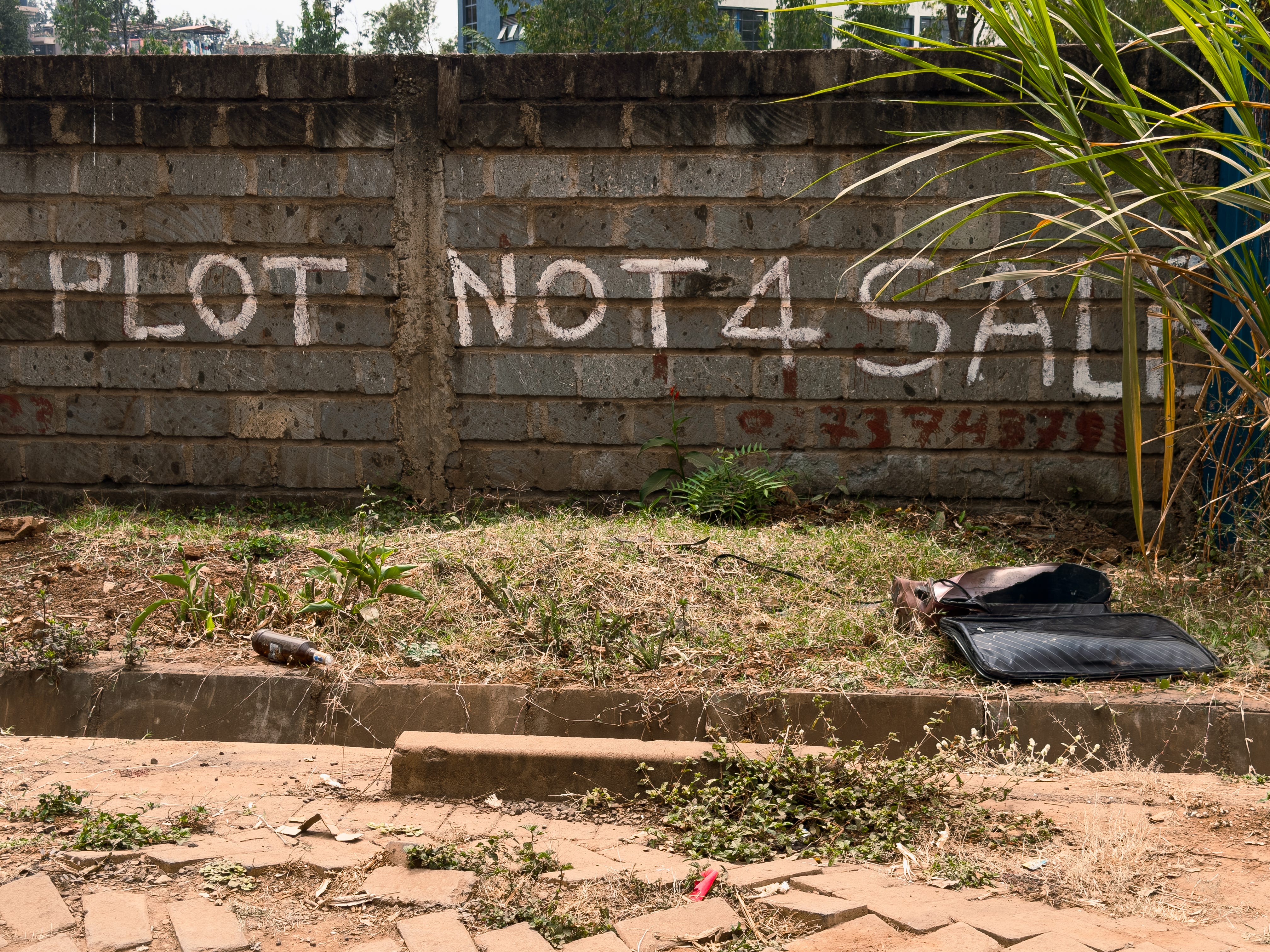
Otherwise, the administration is not offering the country a blank page. No successor plan may be used to renegotiate constitutional minimums, replace present accountability with some vague future aspiration, or distribute the executive’s specific duties across a blanketed “all of us”. There’s no point asking the country to pretend that the banana it has in its hands is not, in fact, an actual banana that it is currently stuffing in its mouth.
A state ready to listen does not begin by passing the microphone. It begins by answering for what happened - for what it meted upon us - when we spoke.
And we all witnessed what happened when we spoke. Many still carry the scars, many still bear the grief.
Allovasudden, they know how to listen.
Allovasudden, they’re ready to listen.
Allovasudden.
Postscript: Those quotation marks have really earned their allowance in this one. Wueh.
Ok, one more, just for safety.
“.“
The people shall🫡🫡